
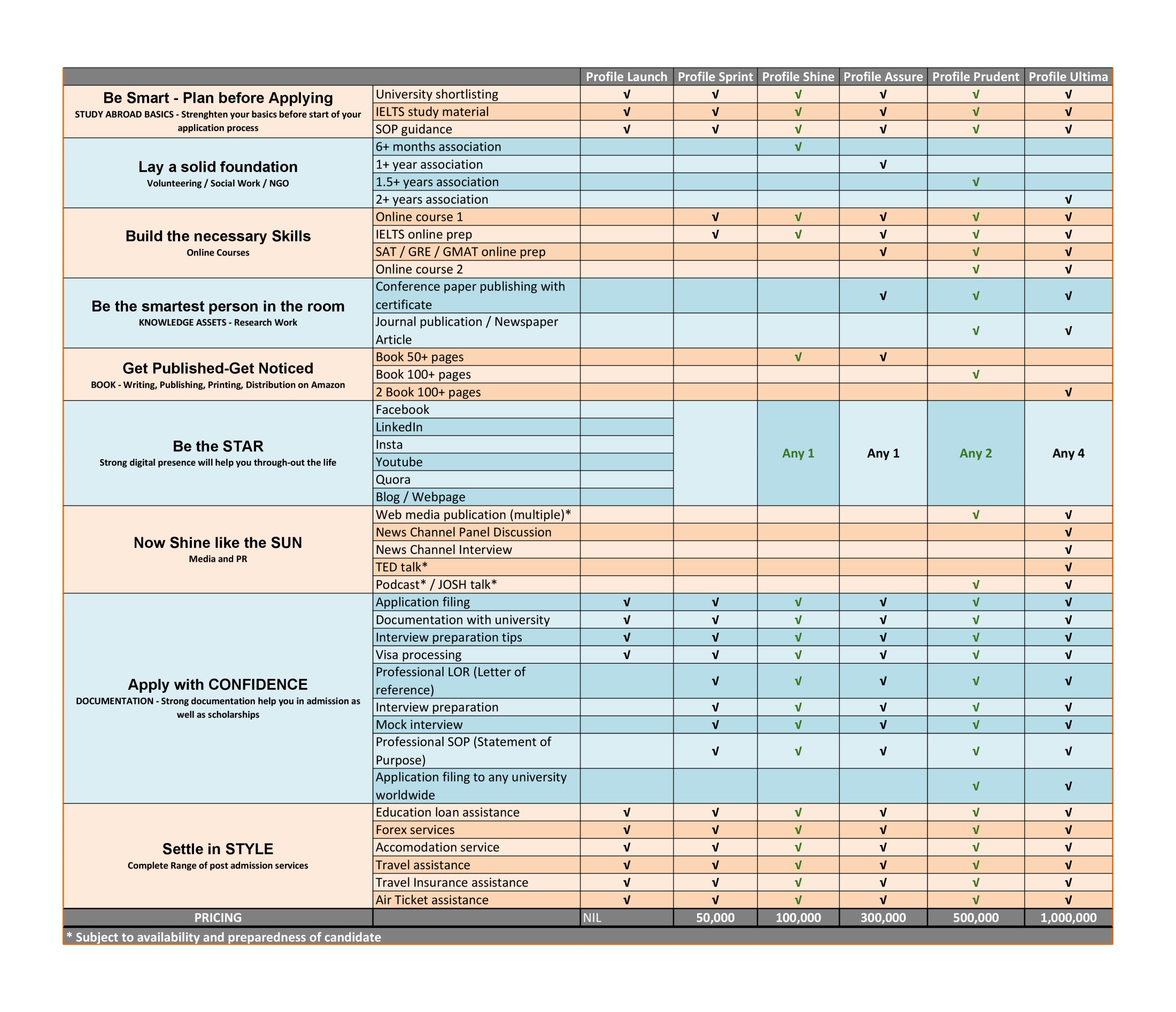
Frequently Asked Questions
A. Strong academics play an important role in having a strong profile, but it not everything. Universities and institutions abroad looks for additional extra-curricular activities along with strong academics. So students needs to focus on their academics along with indulging in other work if they are looking for profile building for study abroad and are targeting top ranked institution in the world.
A. Getting admitted to a top-ranked university can be challenging, particularly if you don’t have strong academics. However, it’s not impossible. Many universities take a holistic approach to admissions and consider factors beyond just grades and test scores, such as extracurricular activities, work experience, and essays. Additionally, some universities offer programs specifically designed for non-traditional students or those with weaker academic backgrounds. It’s also important to note that some universities have more lenient admission standards for certain majors or programs. So, it’s worth researching and applying to universities that align with your strengths and interests. It’s also worth noting that having a strong score in standardized tests like GRE, GMAT, SAT, TOEFL etc can help in getting admitted to top universities. It’s important to research various universities and programs and to apply to a range of schools to increase your chances of getting admitted.
A. The weight given to community work by foreign universities can vary depending on the institution and the specific program to which you’re applying. Some universities may place a greater emphasis on community service or volunteer work than others. Universities often look for applicants who have demonstrated a strong commitment to community service, leadership, and civic engagement. Community service can demonstrate your ability to work effectively with others, your communication skills, and your ability to take initiative and be responsible. Additionally, it shows that you are a well-rounded person who cares about the community and has made an effort to make a positive impact. It’s also worth noting that some universities may have a specific program or scholarship that rewards students who have made a significant impact through their community service. It’s a good idea to check the specific admission requirements of the universities and programs you’re interested in to get a sense of how much weight they place on community service. And also you can contact the admission office and ask them directly about the weight given to community work. When submitting your application, make sure to highlight your community service and volunteer work in your resume, essays and cover letter, to showcase your engagement and impact in the community.
A. It can take varying amount of time to strengthen your personal profile for abroad studies, depending on the specific areas you want to improve in. Generally, it can take several months to several years to build a strong personal profile for abroad studies. To strengthen your profile, it’s important to focus on the areas that are most important to the universities and programs you’re interested in.
Areas that can strengthen your personal profile include:
- Extracurricular activities and leadership roles
- Work experience and internships
- Study abroad experience
- Community work
- Language proficiency
- Research experience
- Awards and recognition
Keep in mind that the application process for abroad studies can take several months, so it’s important to start strengthening your personal profile well in advance of the application deadline. Ultimately, the time it takes to strengthen your personal profile for abroad studies will depend on your individual circumstances and the specific areas you want to improve. With a clear plan and consistent effort, you can achieve your goal of studying abroad.
A. Not necessarily. Not having a background in sports will not be taken as a negative factor in your profile building for university admission. While many universities do value participation in sports and other extracurricular activities, they also understand that not all students have the opportunity or interest in participating in these activities. Universities look for a balance of academic and non-academic achievements. So, it’s important to focus on other areas that you can demonstrate your skills, talents and interests. For example, if you have been involved in volunteering, community service, clubs, societies or any other extracurricular activities, that can help to show your leadership, teamwork, and communication skills.
Also, if you have any special skills or talents like music, art, writing, public speaking, coding, etc can be highlighted in your application. Work experience, internships and research experience can also be a great way to showcase your skills and interests. It’s important to highlight your achievements, skills, and experiences in your application, regardless of whether they are related to sports or not. Overall, the universities look for a well-rounded candidate, so if you have a strong academic record and other achievements, not having a background in sports is unlikely to negatively impact your chances of being admitted.